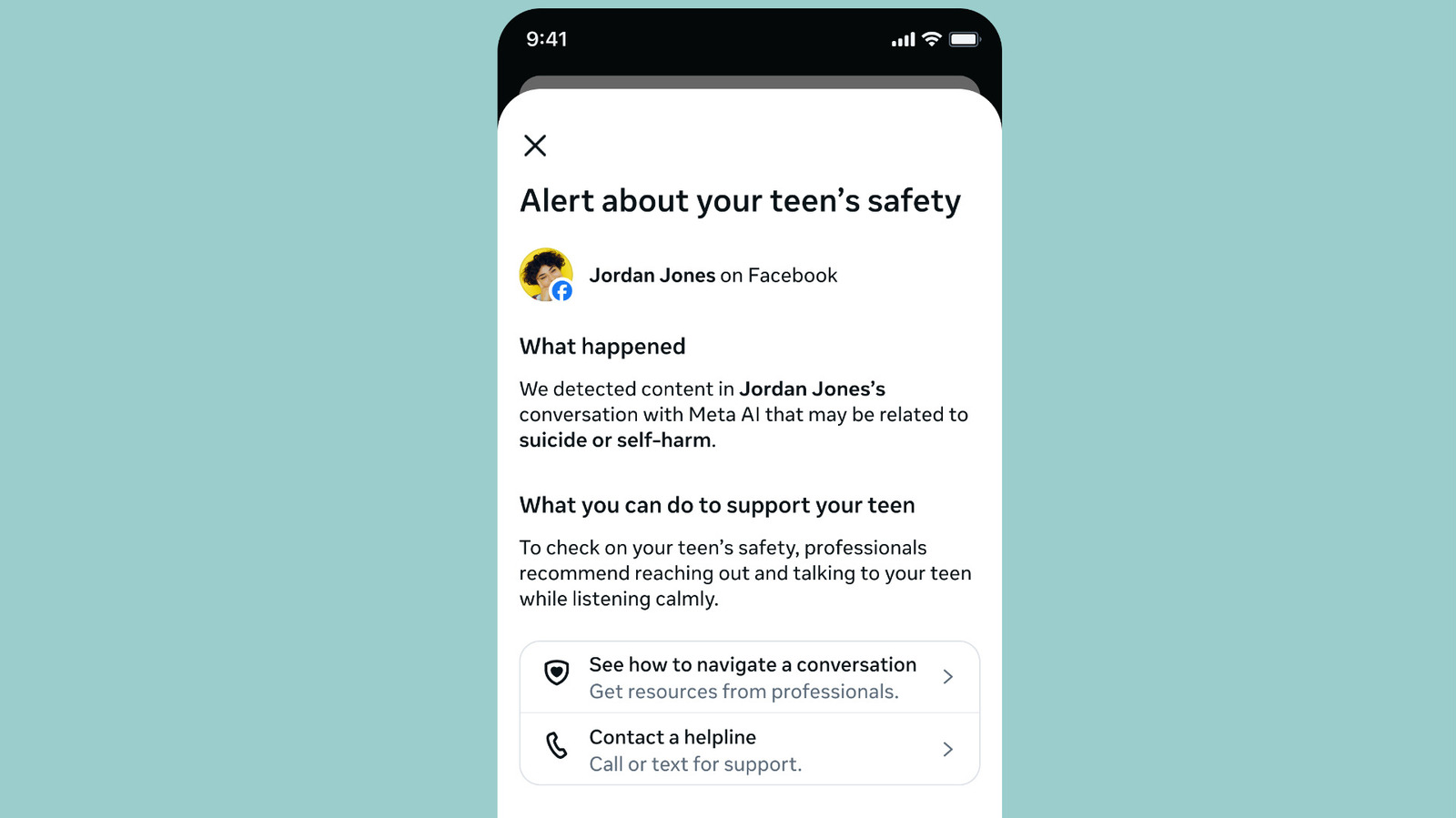
Meta's Parental Notification System
Meta has announced an expansion of its parental notification system, which now includes alerts for when teens repeatedly search for self-harm content on Facebook or engage in conversations with Meta AI that suggest potential risk. This move is part of Meta's strategy to encourage teens to use parent-supervised "teen accounts" with restricted privacy settings and limited access to sensitive content.
Concerns and Reactions
"A young person confides in meta AI that they’re depressed that they can’t be themselves and be openly gay
Meta informs the kid’s anti-LGBTQ parents."
This comment highlights a potential downside, where the system could inadvertently out vulnerable teens to unsupportive parents. Another user adds, "That's considered a 'feature' to the child safety fanatics."
"Teens are still on Facebook?"
Some question the relevance of Facebook to teens, suggesting that the platform's appeal may be waning. One user theorizes, "the ban on social networks is a ploy to make the 'facebooks' of the internet again appealing to teens ... like a forbidden fruit of sorts."
"repeatedly?"
The criteria for triggering notifications are intentionally vague, with one user humorously suggesting, "It's a number between zero and infinity, which number, you might wonder, who knows 🙂"
"Using their social media platforms is already taking part in self-harm."
This comment reflects a growing sentiment that social media itself can be harmful, especially for vulnerable teens.
"Parents aren’t parents if they rely on meta."
Some users express skepticism about the effectiveness of relying on Meta's system, believing that true parental involvement is key.
"I never really thought about searching Facebook for that kind of stuff because in theory it shouldn't be there... but I guess for the handful of kids that are.. ok?"
This comment underscores the unexpected nature of such searches on Facebook, with another user responding, "back in my day, some blogs had a section that showed what google searches led to users accessing the blog ... NOTHING can surprise me regarding what people can look up, NOTHING."
"Further violations of privacy."
Privacy concerns are raised, with some seeing Meta's move as an invasion of privacy.
"Nice, I bet many parents will be glad to beat the self-harm out of them."
This comment hints at the potential for abuse, with another user adding, "They will once they get sued."
"I thought all of Facebook was self-harm content."
A humorous take on the pervasive nature of self-harm content on Facebook.
"🤣🤣🤣🤣 Sure let's go with that. Ole Zuck only cares about trying to catch Elon, Bezos, etc. He could careless about harm caused by his product."
Skepticism towards Meta's motives is expressed, with a user suggesting that the company's primary focus is on competition rather than user well-being.
"How about closing it?"
Some users question the effectiveness of Meta's approach, suggesting that a more drastic measure might be necessary.
Conclusion
Meta's decision to alert parents about teen self-harm content searches has sparked a range of reactions, from support for teen safety measures to concerns about privacy, potential abuse, and the system's overall effectiveness. While the intention is clear, the execution and potential consequences are complex and open to debate.

